

Blog

Top Reasons People Choose Veneers

October 26th, 2022

Dental veneers are a way to correct and transform your smile by using “contact lens”-thin shells of porcelain or ceramic material and bonding them to the front of your teeth. They are strong and durable, look and feel like natural teeth, and improve your smile immediately. Here are some of the top reasons to consider getting dental veneers.

They Correct Multiple Cosmetic Issues

Dental veneers can help with cosmetic and dental health issues, and treat multiple problems at once. Some common reasons that individuals choose veneers is to close gaps and spaces between the teeth, fix alignment issues, change the overall shape and appearance of a tooth, whiten a smile by covering stained or discolored teeth, and cover chipped or cracked teeth.

If you have teeth that are already worn down and weakened, veneers help prevent further damage by covering them with a thin, tooth-colored shell.

Durability

Dental veneers are also extremely durable. They last several years longer than traditional composite fillings. You’ll have peace of mind when you choose veneers, knowing that you’ll have your new smile for many years. On average, dental veneers last about ten to 15 years. Just like your natural teeth, when you take good care of your veneers, they last longer.

Easy to Clean and Maintain

Keeping your veneers healthy and white is easy: You simply brush and floss them the way you do all of your teeth. Shortly after having your veneers installed, you’ll begin to think of them as your natural teeth because the thin shells lie right on top of your existing teeth. This makes it easy to floss and brush the way you normally would and keep them as clean as possible.

The Process is Simple

Getting dental veneers is a quick and easy process. You have a few short visits at Cataraqui Dental Centre and see results. On average, it only takes about four weeks from your first appointment to your last to complete the veneer process.

If you are considering getting dental veneers, schedule a consultation appointment with Drs. Tom Holmes, Gordon Lansdown, Karen Nesbitt, Nick Cosman, Brett Empringham, and Patrick McDonough to find out exactly how they can benefit you.

Your Toddler’s First Dental Visit

October 26th, 2022

It’s common for toddlers to be wary of strangers, but their first experience at the dentist shouldn’t be a scary one. Drs. Tom Holmes, Gordon Lansdown, Karen Nesbitt, Nick Cosman, Brett Empringham, and Patrick McDonough and our team have five tips for you to make your child’s first visit to Cataraqui Dental Centre easy as pie!

  1. Bringing your child to one of your own appointments before his or her first dental visit can calm your little one’s nerves. This gives your son or daughter the opportunity to get familiar with our office and see a cleaning isn’t very scary.
  2. Our big dental chair can be fun! Toddlers love games, and seeing the chair go up and down can make it seem like an amusement ride rather than sitting down for an exam.
  3. Drs. Tom Holmes, Gordon Lansdown, Karen Nesbitt, Nick Cosman, Brett Empringham, and Patrick McDonough and our team hand out cool toothbrushes and stickers to kids after their appointment. Your child will love the fun-colored toothbrush and can look forward to a post-appointment prize at the next visit.
  4. Schedule your appointment for a time that sets you up for success. Bringing your child to our Kingston, ON office an hour before he or she is due for a nap may be a tantrum just waiting to happen.
  5. Kids love books! Try reading your toddler bedtime stories about what happens at the dentist before you come in for the appointment. We recommend Dora the Explorer’s Show Me Your Smile, written by Christine Ricci.

What's the best dental floss?

October 19th, 2022

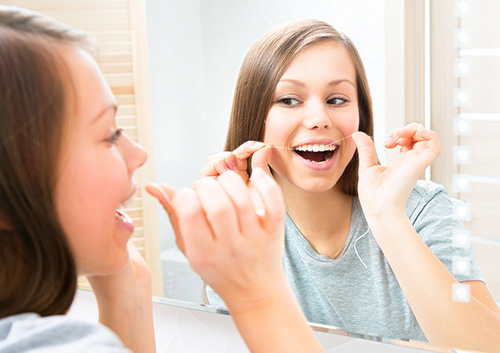
Dental floss is similar to a lot of products that depend mainly on the consumer’s preference. Fact is, floss comes in a wide variety of flavors, coatings, and other variations, but all types of floss essentially do the same thing. After all, that is what is most important: that the dental floss you buy is functional—cleaning the areas in between your teeth. If you want to know what the best dental floss is, the answer is the kind that enables you to successfully and regularly clean those areas. So to help you find the right type of floss for you, here are some options.

Flavored Dental Floss

Many people that floss prefer a flavored dental floss because it freshens their breath even more than unscented floss. The latter can also take on the smells associated with bacteria in your mouth. And we all know how bad that can be. So, if flavored dental floss is what you prefer, and it allows you to floss your teeth regularly, then it is automatically best for your mouth.

Flossers

There are also products on the market called flossers, which usually consist of a plastic instrument with strung floss and a pick on the opposite end. This option can be both effective at cleaning the areas in between your teeth and scraping off plaque. These flossers also come flavored in mint and various other varieties.

Gentle Dental Floss

Some people find that typical dental floss is too harsh on their gums. For that reason some companies make floss with soft coatings that are less abrasive on the gums. For the most part these types of floss are just as effective as regular floss, and for those people that require a more sensitive approach to flossing, especially when just starting out, this is the best option.

Of the aforementioned options, it is difficult to name an absolute best type of floss. However, Drs. Tom Holmes, Gordon Lansdown, Karen Nesbitt, Nick Cosman, Brett Empringham, and Patrick McDonough and our team say that the type of floss that works best for you, giving you the greatest chance of succeeding at regular flossing, is the best. For more information on floss, contact our Kingston, ON office.

Morning Sickness and Your Oral Health

October 19th, 2022

Whether it’s your first child or you’re an experienced mom, pregnancy is an exciting time—which you’ll be able to enjoy much more once the days of morning sickness are over.

Morning sickness affects most pregnant women, and can present in any number of ways. It might take the form of mild nausea, or cause frequent vomiting. It often occurs in the morning hours, but can take place at any time of day. It’s usually over with by the second trimester, or it can last weeks longer. Because of this wide variety of symptoms, morning sickness is more accurately referred to as NVP, the nausea and vomiting of pregnancy.

Your doctor can recommend safe and effective ways to deal with NVP, especially when symptoms are more severe. We have some recommendations to minimize the effect of morning sickness on your dental health.

Wait, dental health? That’s right. Besides its more obvious unpleasant consequences, NVP can cause problems for your teeth and gums. We have a few suggestions for getting you through the weeks of morning sickness with easy and effective strategies to protect your oral health.

Prevent Acid Damage

Vomiting and heartburn with reflux expose the teeth to stomach acids. Tooth enamel is the strongest substance in the body, but it’s not safe from acid attacks.

Normally, the pH balance in our mouths is neutral, around a 7 on a scale of 0 to 14. When acidic conditions lower the oral pH to 5.5 or below, the minerals in enamel begin to dissolve, leading to sensitivity and, eventually, cavities. The pH of our stomach acid ranges from 1.5 to 2.5. This is great for digesting food, but not great at all for enamel and sensitive gum tissue.

Whenever we vomit, the immediate (and understandable!) impulse is to reach for our toothbrushes. But this is an impulse we should resist. Because acids weaken tooth enamel, scouring the teeth with a toothbrush right away can cause more erosive damage. Instead,

  • Wait half an hour or more before brushing to give your enamel time to recover its strength.
  • In the meantime, rinse with water and perhaps a bit of toothpaste or diluted, doctor-approved mouthwash.

Keep Hydrated

Another consequence of frequent vomiting is dehydration. It’s always important to keep our bodies properly hydrated, and this is particularly true during pregnancy.

Hydration is also essential for oral health. Saliva helps wash away the bacteria and food particles which cause cavities and irritate the gums—especially important now, since pregnancy hormones can leave you more vulnerable to gingivitis and other forms of gum disease.

  • Drink water as recommended by your doctor. It’s healthy, it hydrates, and it helps prevent cavities and gum disease. Win/win/win.
  • Whichever fluids are your favorites, drinking them in measured amounts through the day will be more effective and more appetizing than drinking large amounts once or twice a day to catch up.
  • You have a busy life, so make things easy on yourself. If you need to hydrate more, keep track of your hydration goals with an app or a phone notification. There are even “smart bottles” to track your intake. Or go old school, and fill a bottle marked with timed measurements to remind you to hydrate through your day.

When The Very Idea of Brushing Is Nauseating . . .

When just the thought of brushing is unappetizing, we have suggestions which might help.

  • Postpone brushing until later in the day when you feel better. Rinse with water first thing in the morning instead.
  • Trade in your regular toothbrush for one with a smaller brush head. This can help prevent the gag reflex.
  • Brush slowly, using small strokes.
  • If brushing the back teeth is particularly triggering, try deep breathing or sitting down to brush.

We want to help you enjoy a healthy pregnancy. Let us know when you first learn you’re pregnant. We have some valuable tips for the coming months, including suggestions for reducing the dental effects of NVP. Fortunately, morning sickness is temporary, and we’re here with ideas to help your beautiful smile last a lifetime!