
Blog

The Secret to Fresh Breath

October 6th, 2021

Bad breath: We’ve all dealt with it. You’ve been around people who have it and, like it or not, you have had it yourself. It can be embarrassing and uncomfortable, but how do you know if you have it? There is actually a simple test you can do to see if you have bad breath.

Wash your hands well, then put your finger in your mouth, way in the back. Scrape a little saliva from the back of your tongue, and then dab it on the back of your hand. Wait for one minute, then hold your hand to your nose and sniff. Is it fresh as a daisy? Or do you need to keep reading and learn how to freshen your breath?

How Bad Breath Starts

There are several ways that bad breath starts. Knowing the causes of bad breath is a solid start toward the cure.

  • The bacteria in your mouth: Bacteria is always in your mouth. It covers your gums, hides between your teeth, and hangs out on your tongue. As it multiplies, it produces toxins that cause the foul odor in your mouth.
  • Your bad habits: If you smoke cigarettes, a pipe, or cigars, or chew tobacco, you are not only harming your mouth and body, you are creating some really smelly breath.
  • Your tonsils: If you still have your tonsils, they can be the cause of bad breath. They are pitted, so smelly substances can collect in the pits and lead to bad breath.
  • Stomach issues: A stomach virus, ulcer, GERD, and other stomach issues could be the cause of your bad breath. A low-carb diet can put your body into a state of ketosis, which causes very bad breath.
  • The foods you eat: Garlic, onion, and other pungent foods will linger with you … on your breath.

Tips for Busting Bad Breath

Achieving fresh breath isn’t difficult, but it does require a little work. Try these tips for fresher breath and a healthier mouth.

  • Brush your teeth after every meal. You can also pick up a tongue scraper to use a couple of times a day to remove any lingering bacteria on your tongue.
  • Floss once a day to remove food particles between your teeth as well as plaque. Your mouth will thank you.
  • Gargle with special mouthwash to banish bad breath. The oxygen in it will kill the bacteria in your mouth that is causing your bad breath, and leave you fresh as a daisy!
  • Drink water to avoid dry mouth, which is a common cause of bad breath.
  • Ease your tummy troubles with antacids and other remedies. Ginger tea is a great tummy tamer.
  • Chew gum that contains xylitol. Saliva keeps your mouth moist, and chewing gum makes you salivate. Bye bye, bad breath!
  • Eat yogurt. It contains “good” bacteria that helps balance your gut and gives you a healthier mouth.
  • Soothe your sinuses. Sinus infections can cause you to have bad breath. Actually, it is the post-nasal drip that causes the foul odor. Cure the infection and your breath will improve.
  • Avoid all tobacco products (cigarettes, pipes, cigars, chewing tobacco, and snuff).
  • Eat a healthy diet of fresh fruits and vegetables, lean meats, and whole grains.

And don't forget! Get regular dental checkups at Cataraqui Dental Centre.

Foods can Wreak Havoc on Your Enamel

September 22nd, 2021

It’s possible to develop tooth decay even when you take great care of your teeth. Brushing and flossing may not be enough to keep your teeth healthy, depending on your diet. Cavities, discoloration, and decay are still possible when certain foods feature in your daily intake. Keep an eye out for foods that will damage your enamel and cause the very issues you’ve been trying to avoid.

What causes enamel damage?

Tooth enamel is the hard outer layer of your teeth that is made of various minerals. Tooth decay results when the acids in your food react with the minerals in your enamel. Strongly pigmented foods may also cause unsightly discoloration on the surface of your teeth. Avoid wreaking havoc on your beautiful smile by identifying the foods that can harm your enamel.

Acid

Acidic food is your teeth’s worst nightmare! This is the greatest cause of enamel damage, even if you brush and floss regularly. To avoid damaging your teeth, make sure you can determine whether a food is acidic or not.

The pH levels are a way to determine acidity on a one-to-seven scale. This defines the relative acidity or alkalinity of a food or substance. Foods with high pH levels are not as likely to harm your enamel.

It’s wise to avoid or minimize foods that are high in acids. Highly acidic food can include fruits such as lemons, grapefruit, strawberries, grapes, and apples. Moderately acid foods may surprise you; they include tomatoes, maple syrup, pickles, and honey.

Not surprisingly, eggs and dairy products such as milk and cheese contain the least amount of acid. Red wine and coffee can also discolor your enamel if they’re drunk in excessive amounts.

What can I do to prevent enamel damage?

There are plenty of ways to avoid discoloration and decay of your enamel. The best thing to do is limit the amount of high-acid foods, including sugary juices and soda, in your diet.

Another way is to brush and floss regularly, an hour after each meal. If you can’t make time to brush, an easy solution is to swish your mouth with water or mouthwash to rinse away any leftover acidic particles.

Damaged tooth enamel may be common, but is avoidable when you know which foods to stay away from and the steps to take after you do eat highly acidic foods. Take our advice and you’ll be sure to slow down any future discoloration and decay that happens in your mouth.

For more advice on protecting your enamel, give our Kingston, ON a call to learn more!

Make Brushing With Your Child Fun!

September 15th, 2021

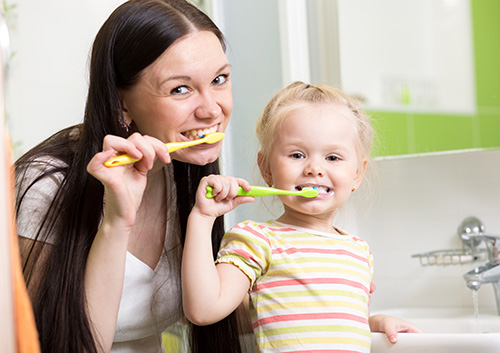
It’s no secret that kids and adults have different priorities: your duty is to raise a happy, healthy child, but your little one’s only priority may be to have fun. When it comes to brushing teeth, it can be hard to combine a healthy habit with having fun. You might fear it can’t be done, but with a little creativity, brushing time can be a great experience for both of you!

Make It a Party

Brushing time doesn’t have to be a chore when you throw a little party! Get Mom and Dad together so the whole family can brush their teeth at the same time.

Let your child choose a song to dance to while you all brush for the required two minutes. Your son or daughter may grow to love this silly routine, especially when the parents are clearly dedicated to brushing their own teeth as well.

Big Kid Decisions

Kids love the responsibility of making “big kid” decisions. Keep a variety of toothbrushes, colors of floss, and toothpaste flavors on hand so they can choose something “new” each time they brush, just like when they visit our Kingston, ON office.

Not only can this help them grow more comfortable with the idea of seeing the dentist, but they’ll love having the responsibility of picking what would be fun at brush time.

Practice Makes Perfect

It’s true that the only way to get better at something is to practice, practice, and practice. Have your child practice brushing on his or her favorite stuffed animal, and use that opportunity to teach your youngster how to hold the brush and use circular cleaning motions. Showing how you brush your own teeth can also be worthwhile.

There’s An App For That

Did you know there are lots of fun apps that encourage good brushing habits among children? Brands like Oral-B and Aquafresh have free apps you can download on your phone.

The child gets to select a character, scenery, and a song he or she would love to accompany the task of brushing. If you have a daughter, she might like to use the Tooth Fairy Timer, which allows her to pick her very own fairy as her brushing buddy.

The important things to remember when you seek to establish good brushing habits is to keep it fun and stay consistent with your routine. It may take some getting used to, but after a while your child will become familiar with brushing and might even look forward to the new dental routine.

Antibiotic Prophylaxis or Pre-Medication

September 8th, 2021

At Cataraqui Dental Centre, we know the human mouth contains a lot of bacteria. A bacterium can travel through your body with routine activities that are a normal part of daily living. You spread bacteria when you brush or floss your teeth, when you chew, and when you swallow.

For most people, bacteria don’t cause any problem. For some people, however, especially those who have chronic medical conditions, specific cardiac conditions, or whose immune systems are compromised, bacteria that spreads throughout the bloodstream can lead to much more serious bacterial infections.

The goal of pre-medication or antibiotic prophylaxis, Drs. Tom Holmes, Gordon Lansdown, Karen Nesbitt, Nick Cosman, Brett Empringham, and Patrick McDonough will tell you, is to prevent bacterial endocarditis, a serious infection of the endothelial heart surfaces or the heart valves. The condition is also called infective endocarditis. A small population of people with certain health problems has a high risk for contracting this potentially deadly bacterium.

The Heart and Stroke Foundation of Canada states that people at greatest risk for contracting bacterial or infective endocarditis are:

  • Patients who underwent cardiac valve surgery in the past
  • Those who have suffered past incidents of infective endocarditis
  • Patients who have mitral valve prolapse, resulting in or causing valve leakage
  • People who have had rheumatic fever or any degenerative cardiac condition that produces abnormalities in cardiac valves
  • Patients who suffer from certain congenital heart diseases

For these patients, any dental procedure may cause bleeding, and prophylactic antibiotic administration is recommended as a preventive measure.

Other patients who require prophylactic antibiotics

The Canadian Academy of Endodontists extends recommendations to patients who have undergone joint replacement surgery within the past two years, suffer from type 1 diabetes, or have immune deficiencies from diseases such as lupus, rheumatoid arthritis, or HIV; cancer patients whose immune systems are suppressed because of radiation or chemotherapy; people who have had organ transplants; and hemophiliacs.

The Canadian Academy of Pediatric Dentistry also includes people who suffer from sickle cell anemia, as well as patients who suffer from conditions that require chronic steroid therapy.

Typical endodontic procedures for which antibiotic prophylaxis is recommended include root canal therapy (when it involves going deeper than the root apex), surgical tooth extractions, and any other dental, endodontic, or periodontal procedure during which the doctor anticipates bleeding.

Although different medical societies and organizations offer these guidelines as a way of identifying patients for whom prophylactic pre-medication is essential prior to dental procedures, dentists will take each patient's medical history and personal risk factors into consideration. Some doctors may choose to administer antibiotics following a procedure, especially for patients who have previously suffered from oral infections either as a result of dental procedures or that necessitated oral surgery.

For more information about antibiotic prophylaxis, or to schedule an appointment with Drs. Tom Holmes, Gordon Lansdown, Karen Nesbitt, Nick Cosman, Brett Empringham, and Patrick McDonough, please give us a call at our convenient Kingston, ON office!